A warm, relaxing bath is an awesome way tode-stress and unwind.
Or, maybe ashoweris your go-to way to feel refreshed.
But no matter which method of getting clean you prefer, the decisions don’t stop there.

If you’re a fan of sponges, then you’ve got two main choices: natural or synthetic.
According toNatural Bath and Body, natural sea sponges can come in a variety of sizes and textures.
Wool sponges are soft, while yellow sponges offer a bit of exfoliation.
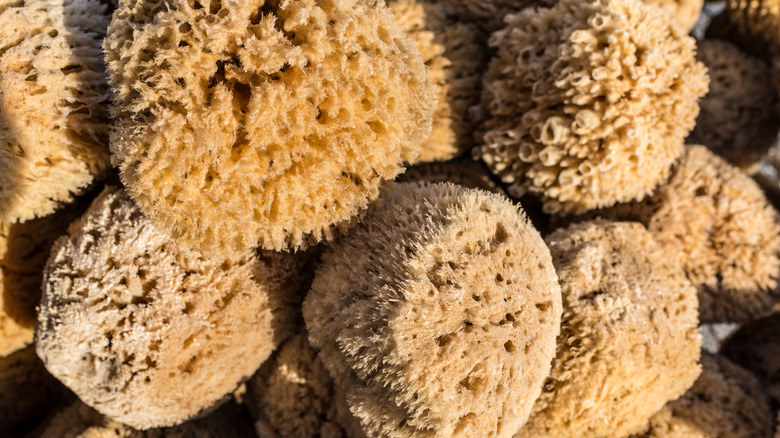
For anyone looking for some extra scrub, Caribbean Grass sponges provide even more exfoliation.
Per theChicago Tribune, synthetic foam sponges can have a porous texture that better absorbs water.
Some are crafted to look more like sea sponges, while others more closely resemble kitchen sponges.
These natural sponges are also pros at retaining water, making it easier to get clean.
By contrast,How Stuff Worksreports that synthetic sponges require antimicrobial ingredients to prevent germs, such as triclosan.
Another reason for opting for natural sponges is the fact that they are sustainable (when properly harvested).
PerHunker, synthetics are often made from tree-based cellulose and polyurethane, a petroleum byproduct.
Manufacturing these sponges can also cause pollution.
Furthermore, natural sponges are gentler at cleaning and better for your skin.
According to How Stuff Works, synthetics can be too abrasive, and antibacterial chemicals could irritate your skin.
For an optimal choice,Natural Spa Suppliesrecommends an unbleached sponge.
Once it’s time to retire your sponge from bathing, you could reuse it for cleaning purposes.
Afterwards, natural sea sponges can be cut up and composted.
Conversely, a synthetic sponge may take up to 20 years to break down, per Natural Spa Supplies.
