Women’s empowerment in Hollywood productions still has a long way to go.
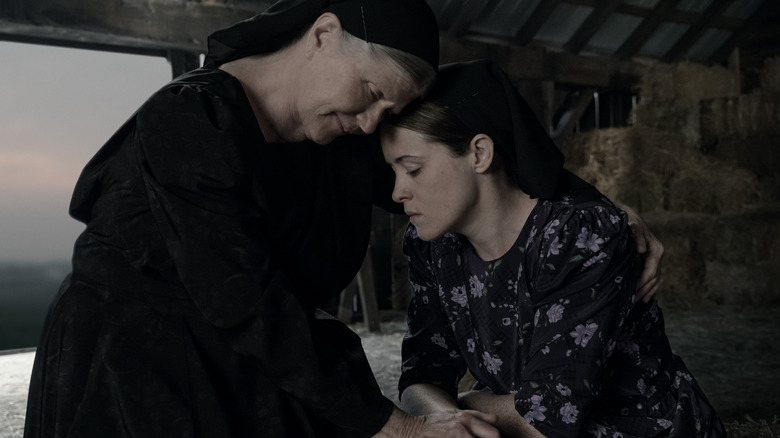
“Women Talking” takes inspiration from a novel of the same name, written by Miriam Toews.
What went into preparing yourselves for that role?
I always go to the script, and it was so rich.
Sometimes with scripts, you have to add and complicate and do backstories.
Caring for [them] enabled my own character to heal too.
That directness and that understanding and that innocence says, “That’s how we deal with this.
We caught them, they’re going to pay for it.”
McCarthy:What we have on our side is patience.
[The younger generation is] slightly more impulsive.
“Let’s make a decision.
Are we not going?
Come on, let’s move on this.”
I can’t lie.
McCarthy:I know.
Ivey:Then we start singing a hymn.
It’s like, “What?
Get out of there.”
McCarthy:And we sing the whole hymn.
What sets this role apart from that role?
There’s an awakening in both characters.
Agnes [is] 30 years older than her suitor, which was never commented on.
The producers went, “No, it’s fine.
You’re in love with him.
I’m okay.”
The awakening for Agnes [is] to have this new love in her life.
There’s these new thoughts in both those characters.
What are they bad at?
What are their flaws?"
How was this experience different on set than other experiences?
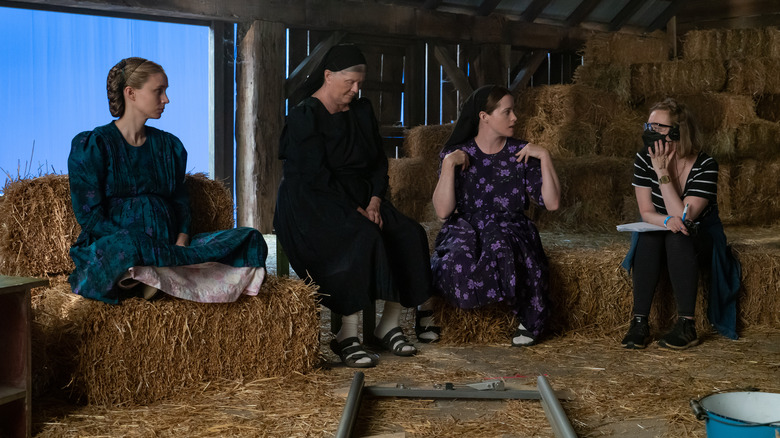
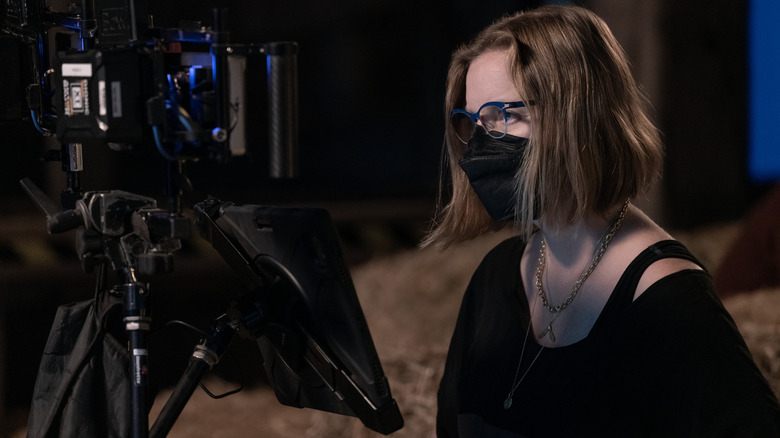
Ivey:There were so many females working on it.
I’ve made enough movies, starting back in the ’80s, where that simply wasn’t true.
It was very refreshing to see female grips and people moving big machinery [who] were female.
It was very comfortable.
I found it a very comfortable set that way.
We weren’t allowed to see anybody.
Nobody came to set.
It was a very pure experience.
How did you feel seeing these issues being covered in the context of a Mennonite community?
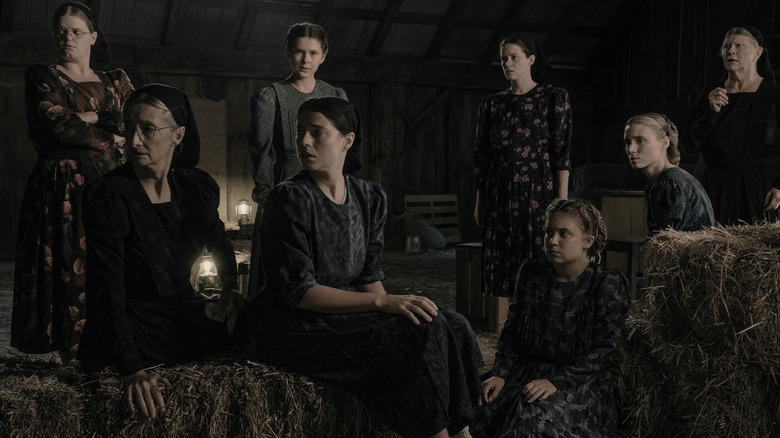
McCarthy:It’s [a] microcosm of the world we live in now in a hayloft.
And that’s Miriam Toews she wrote that novel.
Every person is very three-dimensional in it and well-drawn.
[There’s] the idea that Melvin has chosen not to use his voice.
Again, it’s “Women Talking,” and the metaphors in that were so fantastic.
Unfortunately, the world hasn’t changed.
I would love to hear your perspective on this.
It’s almost a do-or-die situation, and that’s very profound to me.
McCarthy:Films should be a mirror [of] what’s going on in society.
When a need is served, that means the door opens and change can happen.
[When] the movie ended, she was so [affected] right to her core.
She couldn’t talk.
She was so moved.
“Women Talking” will be released in select theaters on December 25 and everywhere in January.
This interview has been edited for clarity.
