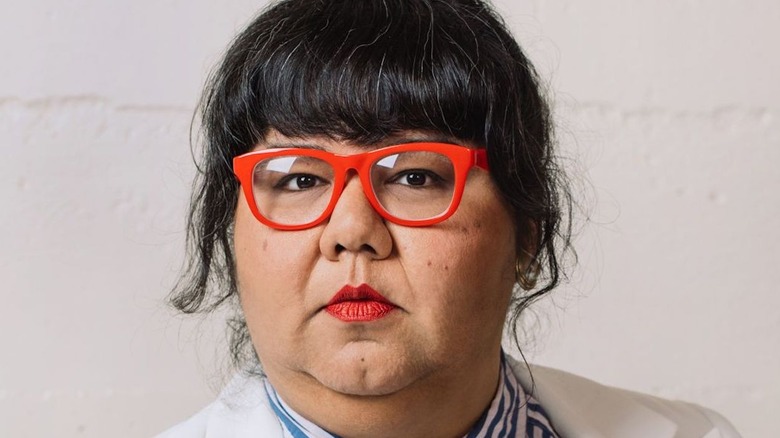
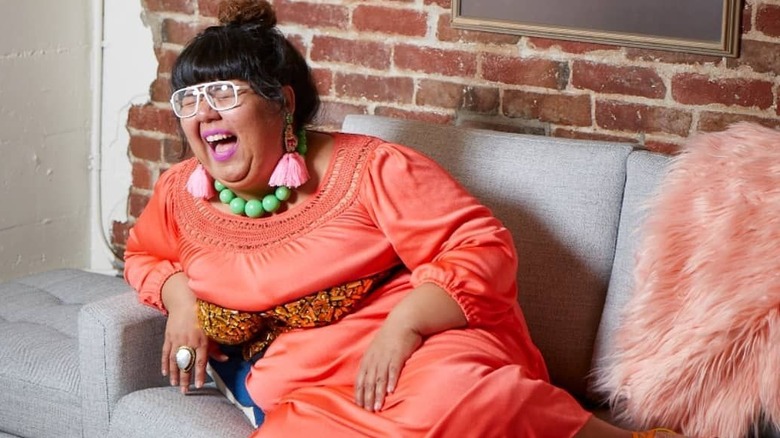
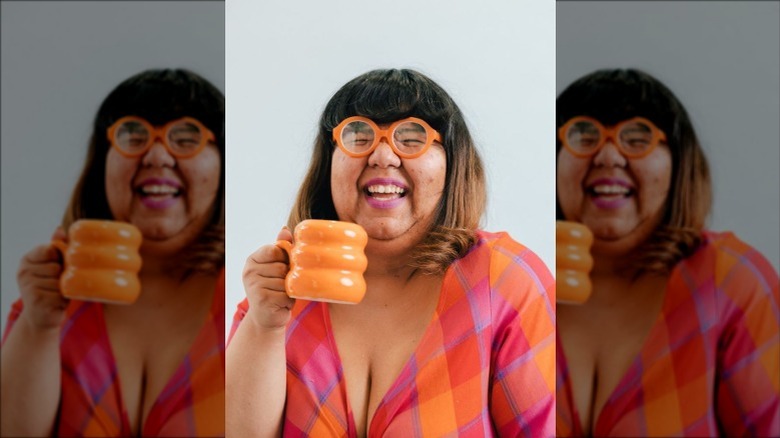
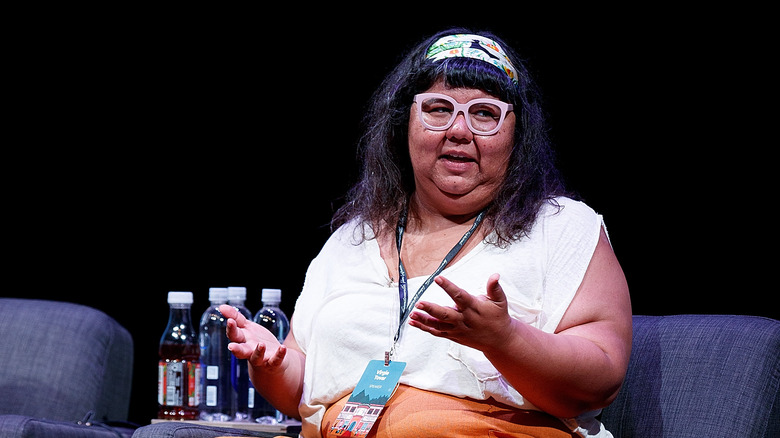
Virgie Tovar is an author and activist against weight-based discrimination.
How Virgie started her body acceptance journey
What first empowered you to start writing about body acceptance?
I have always been in a bigger body.
As a child, I was not introduced to fatphobia at home.
I was introduced to fatphobia at school.
From age 5 to about age 18, I was bullied brutally.
I learned to hate my body.
I saw my body as the reason that people abused me.
I thought that if I could make it the right size [that I could change that].
I developed an eating disorder.
I was obsessively exercising.
My body size changed, but it never became the social normative of thin.
I ended up discovering fat activism when I was almost 30 years old in graduate school.
It completely changed my life.
They were like, “Nothing is wrong with you.
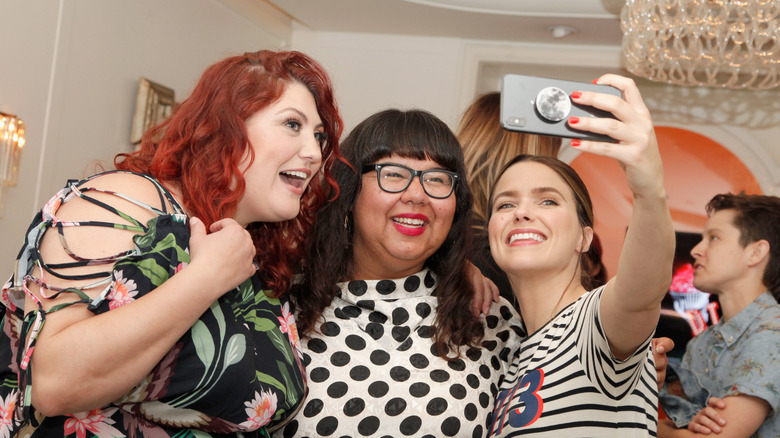
If you need help with an eating disorder, or know someone who does, help is available.
Negative health impacts of body dissatisfaction
How do you feel body acceptance can impact someone’s life?
So many ways I want to start even with my own life.

I hate this body.”
Frankly, I know a lot of people start their day with that feeling.
We know that, for example, dieting chronically leads to mental and physiological stress.
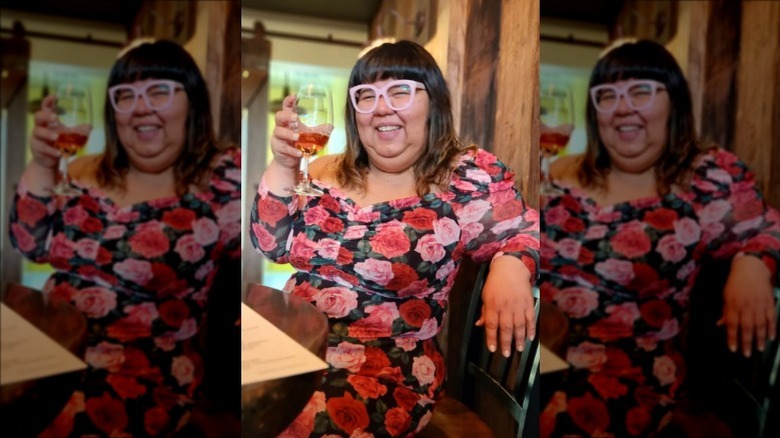
They’re not in anyone’s photo album.
They’re not on anyone’s Instagram.
I think about things like that.
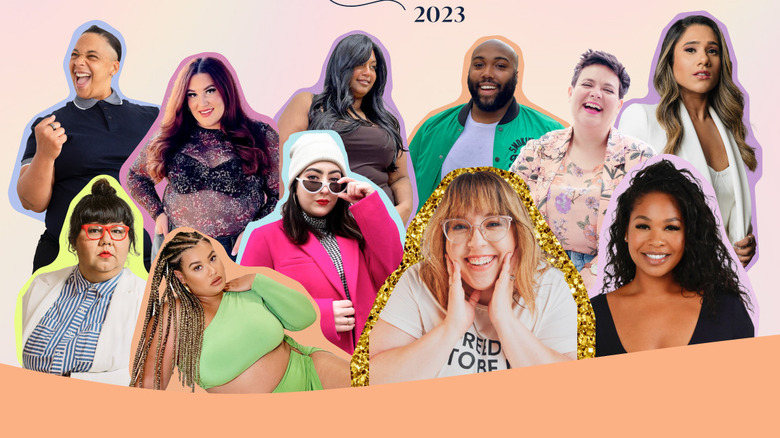
What does that mean to be erased?
That’s really what that is.
We know that leads to those kinds of outcomes.
It leads to poorer sexual decision-making.
It leads to you making worse boundary decisions.
When you work through body acceptance, you begin to be able to change some of those outcomes.
Do you feel like you’ve seen that issue improve or change at all since you started this work?
Well, when I started this work, I never had corporate clients.
I did not have clients who were approaching me and saying, “How do we end weight discrimination?
How do we make a more accessible workplace?
Now, most of the clients who approach me are corporate clients.
The awareness of this issue has gone through the roof from when I started doing this work.
Those are the only people who were hiring me and who I saw having any interest in this issue.
What do you feel are still the biggest obstacles to dismantling weight-based discrimination?
The biggest one is the misunderstanding that this is a health issue and not a human rights issue.
There’s enough science that says that isn’t true, but our culture believes that it is.
They’re less likely to receive preventive medical care than people in thin bodies.
They’re more likely to experience romantic discrimination.
They’re less likely to be able to find clothing in their size.
There’s a huge case to be made about why this is a human rights issue.
People get stuck in, “If I am supporting this human rights issue, am I ignoring science?
Am I ignoring what doctors say?”
It’s important to understand that the current medical position is not based in science.
This is something that more and more people are proving.
Anyway, it’s a very long answer, but that’s the most important thing that people understand.
Right now, that is not available for many, many Americans who are in larger bodies.
Being the first Poynter Fellow in a crop top
You’ve written books.
You’ve written for different magazines.
You’ve done a lot of projects.
Is there anything in your career that you feel like you’re most proud of at this point?
One that comes to mind [is] when I got approached by Yale.
They wanted to offer me the Poynter Fellowship in Journalism.
They brought me to Yale.
They gave me an award, which included a picture of me.
It was so funny.
You’re the first person in our Hall of Poynter Fellows who’s wearing a crop top.”
I’m not wearing a button-down.
I’m wearing a crop top, and I’ve got a flawless belt and a cheetah-print coat.
Virgie’s BodCon workshop
You’re also doing BodCon this year.
What made you want to get involved in that event?
I love doing anything related to …
There’s a lot of different words for body confidence, which is what the BodCon is about.
Body acceptance, body love all of that is my wheelhouse.
I love, love, love helping in any way that I can.
I feel a fire in my belly about sharing those tools and teaching people how to use them.
I’m always excited for an opportunity to be able to do that.
You’re doing a journaling session at the event.
Why do you think journaling is an important tool for people?
I have a new journal out.
It’s called “The Body Positive Journal.”
There are so many things we learn from journaling.
To begin with, it’s a document of our innermost selves.
When we put it to the page, we are saying, “I deserve to exist.
I deserve to have these feelings.
A journal helps us realize that.
I won’t have even noticed it.
I’m like, “Oh, my God!”
One day, I remember, after years and years and years … Again, I had aneating disorder.
I didn’t allow myself to shop in most of the aisles of the grocery store.
I would only stick to four aisles.
I never let myself go anywhere near the refrigerated dessert area.
One day, it wasn’t an issue anymore.
I walked up to the refrigerated dessert section, and I was not spiraling.
It was this incredible moment of like, “Oh, my God.”
I could sense that a colossal thing had happened, and I [almost] hadn’t noticed it.
When you’re on a healing journey, celebrating yourself is actually a therapeutic tool.
It’s part of cognitive behavioral therapy.
There’s a therapy argument for some of this, too.
It’s a metaphor for a blank slate.
It shows us how we can create the life that we want.
The power of the blank page is that you could fill it with anything that you want.
Journaling teaches us that.
Oh, my goodness …
It was to understand that there are two fundamental roles in writing.
He said, “They should never be in the room at the same time.”
The creator should go in I always have the metaphor of a little kid in a bedroom.
I think of our inner creative as that child.
Then you look at all that they’ve created.
This idea is underdeveloped.
This idea has got to go.
This is for another project.”
But to not have those two people and energies in the room at the same time is essential.
This interview has been edited for clarity.
